How Much Paint Do I Need for Interior Walls?
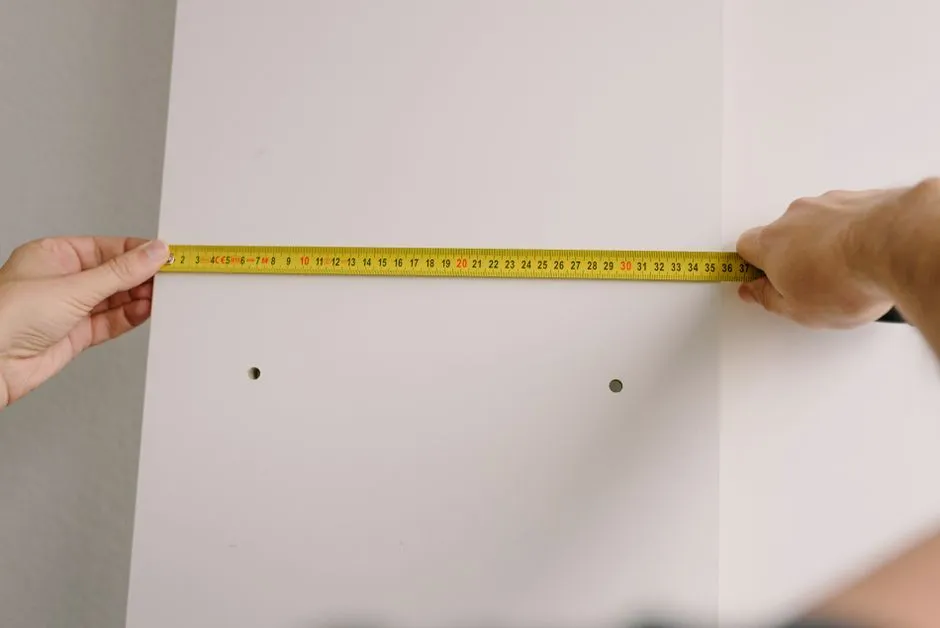
Calculate coated area, then use the actual label
To estimate interior-wall paint, calculate the net wall area, multiply by the planned coats, and divide by the coverage stated for the specific product. Paint labels and technical data sheets outrank generic coverage assumptions because product formulation, surface texture, porosity, and application change how far a container goes.
Keep ceilings, walls, trim, and doors separate when they use different products. A single room can contain several paint estimates pretending to be one project.
Step 1: Find gross wall area
For a rectangular room:
Room perimeter = 2 × (length + width)
Gross wall area = perimeter × wall height
For a room 12 feet long, 14 feet wide, and 8 feet high:
Perimeter = 2 × (12 + 14) = 52 feet
Gross wall area = 52 × 8 = 416 square feet
For an irregular room, measure each wall's width and height separately, multiply width by height, then add the wall areas. Measure sloped or triangular sections as their actual shapes rather than forcing them into an imaginary rectangle.
Step 2: Subtract large unpainted openings
Measure each door or window you will not paint:
Opening area = width × height
Net wall area = gross wall area − total excluded openings
Suppose the sample room has one opening measuring 3 by 7 feet and two windows each measuring 3 by 5 feet:
Door opening = 3 × 7 = 21 square feet
Two windows = 2 × (3 × 5) = 30 square feet
Total openings = 21 + 30 = 51 square feet
Net wall area = 416 − 51 = 365 square feet
You may leave small openings in the estimate as a practical allowance, but be consistent. Do not subtract a door and then forget that painting the door requires a separate calculation.
Step 3: Multiply by coats
If the product and project call for two finish coats:
Coated area = 365 × 2 = 730 square feet
A coat is the full specified application, not one thin pass stretched until the roller files a complaint. Follow required film thickness, recoat time, temperature, humidity, and ventilation on the label.
Primer is calculated separately using the primer's own coverage. A spot-prime plan may require much less than full walls; a major color or substrate change may require more. Our guide to preparing interior walls helps identify repairs and primer needs before purchasing.
Step 4: Divide by labeled coverage
Assume, purely for this worked example, that the chosen product label states 400 square feet per gallon under the relevant conditions:
Gallons = 730 ÷ 400 = 1.825 gallons
You cannot buy 1.825 gallons in every product line, so round up to a combination of available container sizes that covers the calculated need. If the same label instead stated 350 square feet per gallon, the result would be:
730 ÷ 350 = 2.086 gallons
That difference is why the label cannot be replaced by one famous internet number.
Adjust for the real wall
Coverage may fall when walls are porous, deeply textured, repaired extensively, or changing dramatically in color. Spraying can require additional planning for overspray and back-rolling. Brushes and rollers retain some paint. Manufacturer guidance may specify a coverage range; using its lower figure gives a more conservative estimate.
Do not add an unexplained universal percentage. Identify the actual condition and make a documented allowance based on product information and experience with a test area.
The paint planning collection favors visible assumptions. Record room dimensions, subtractions, coats, label coverage, color, sheen, batch information, and purchased quantities.
Keep enough for consistent touch-ups
Buying containers from the same product and color batch where possible can reduce variation, but application and aging still affect appearance. Box multiple containers together—mix them in one larger clean vessel—when product guidance allows, so minor container variation is distributed evenly.
Store leftover paint only as its label permits, in a tightly sealed labeled container away from children, pets, ignition sources, and unsuitable temperatures. Record the room and date. A mysterious beige can is not a touch-up system; it is a future afternoon's least exciting game show.